
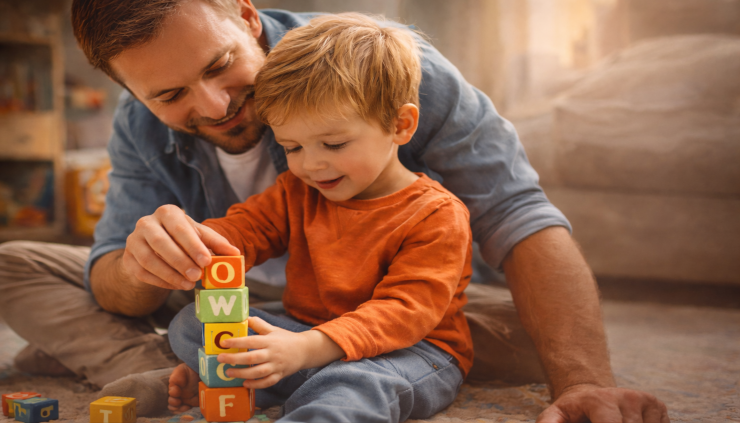
Parents play an incredibly important role in how their children learn and grow. One of the biggest ways they help is simply by offering emotional warmth and support. When young children feel calm and safe, it’s much easier for them to focus, explore, and stay curious.
Strong communication begins with emotional warmth, beautifully explained in our post Super Mommy.
Researchers and parents alike notice that babies and toddlers engage longer when using trusted toys such as the Melissa & Doug Shape Sorting Cube or the Fat Brain Toys Dimpl Baby Sensory Toy — both being parents favorites.
2. Learning Through Warm, Simple Play
Good early learning happens naturally when parents interact with their children during everyday play. For example, when you sit with your one-year-old and explore a shape-sorting toy, a stacking toy, or a simple beginner puzzle, you can talk about the colors and shapes, describe what your child is doing, and respond to their moments of puzzlement or excitement.
Popular early-learning toys include the Fisher-Price Stack & Roll Cups , the Melissa & Doug First Shapes Puzzle , and the Fat Brain Toys InnyBin — each with very high ratings for encouraging exploration and attention.
This gentle “learning talk,” paired with eye contact and a warm voice, helps guide your child’s attention. It also teaches them how conversations work and shows them that their caregiver listens and supports their discoveries.
3. The Power of Early Play
Play is one of the most powerful tools children have for growing into confident little learners. In the first months, simple items like soft rattles, crinkle books, or baby play mats help babies explore sound, texture, and movement. These early “serve-and-return” interactions — smiling, cooing, taking turns — teach babies that communication is fun and rewarding.
Parents frequently choose favorites like the Manhattan Toy Winkel Rattle , the Sassy Tummy Time Floor Mirror , and the Bright Starts Tummy Time Mat praised for supporting early sensory development.
Peek-a-boo and other predictable games, sometimes supported with soft sensory toys, build trust and connection. As children grow, they begin using early words and gestures, often helped along by first-word board books, picture cards, or simple cause-and-effect toys.
Around one year, new movement skills open a whole world of exploration. Toddlers love push toys, ride-on toys, pull-along toys, and small climbing or balance toys. These activities let children test their abilities while still using their parent as a “home base” for reassurance.
High-rated toddler favorites include the VTech Sit-to-Stand Learning Walker , the Radio Flyer Scoot-About Ride-On , and the Melissa & Doug Pull-Along Puppy ideal for building confidence and coordination.
As toddlers gain independence, you help guide them through emotions, problem-solving, and taking turns. Pretend-play blossoms now — feeding a doll, “cooking” in a tiny kitchen, or building a small fort. Pretend play sets, baby dolls, dress-up clothes, and simple building blocks are perfect tools for this stage.
Popular pretend-play items include the KidKraft Vintage Wooden Kitchen , the Baby Alive Sweet ‘n Snuggly Doll , and the LEGO DUPLO My First Number Train — all highly rated for early imagination.
4. Preschoolers: Big Thinking, Big Ideas
Between ages three and five, children begin thinking in more advanced ways. They experiment more deliberately and learn from trial and error. This is a great time to offer toys that encourage creativity, exploration, and early thinking skills.
Recommended toys for ages 3–5 include:
- Beginner science kits
- Matching or memory games
- Storytelling puppets
- Construction sets
- Playdough and art materials
Parents especially love the ThinkFun Zingo Bingo Game , the Osmo Little Genius Starter Kit , the Melissa & Doug Wooden Building Blocks Set , and the Play-Doh Basic Fun Kit which support creativity and early reasoning.
Reading together, extending conversations, asking open-ended questions, and talking about daily experiences all strengthen language, memory, and early literacy. Interactive storybooks and picture dictionaries fit beautifully into this stage of learning.
Many children express emotions more clearly when parents build a strong connection; our quiz Warm Bonds explores this dynamic.
5. Words That Grow
Across all ages, one thing never changes: children learn best when they share meaningful, joyful moments with someone who cares. Toys support the fun — but you are what makes learning truly happen.
Your gentle “learning talk,” warmth, and presence are the foundation of every new skill your child builds. The best toys encourage curiosity — but it’s your responsiveness that turns play into learning.
Read Next
See all posts from “Child’s World” here