
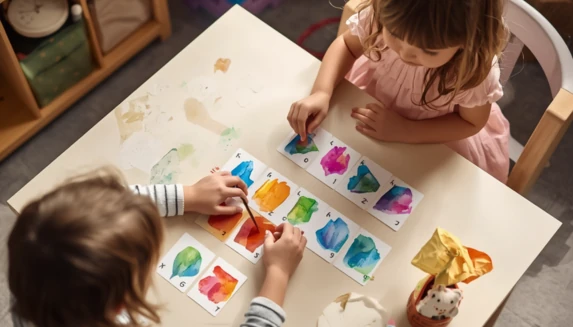
Memory is one of the most important building blocks of learning. Every time a child recognizes a familiar face, remembers where a toy is hidden, follows instructions, or recalls part of a story, memory is at work. These seemingly small moments help children connect experiences, understand patterns, and make sense of the world around them. ( Find here a review of how declarative memory develops in infancy and early childhood and how memory development relates to brain maturation).
In this Article:
- Why Memory Games Matter in Early Childhood
- How Memory Develops from Birth to Age Six
- 0–12 Months: Building First Memory Connections
- 1–2 Years: Memory Through Repetition and Exploration
- 2–3 Years: First Real Memory Games
- 3–4 Years: Memory and Learning Begin to Work Together
- 4–5 Years: Building School-Readiness Skills
- 5–6 Years: Memory Skills for School and Independent Learning
- Everyday Activities That Build Memory
- FAQ
Why Memory Matters in Early Childhood
During the first six years of life, the brain develops more rapidly than at any other time. Millions of neural connections are formed and strengthened through repeated experiences. Memory activities provide opportunities for children to practice storing information, recalling it later, and using it in meaningful ways. These skills support language development, attention, problem-solving, emotional regulation, and eventually reading and academic learning.
Many memory activities become even more effective when combined with movement. Physical activity stimulates the brain and helps children stay engaged while learning. Discover how motion toys can support cognitive development and learning.
While no game can magically increase intelligence overnight, regular memory-building activities help strengthen the cognitive processes that support learning throughout life. The best part is that children develop these skills through play. A few minutes of playful interaction each day can have a lasting impact on brain development.
How Memory Develops from Birth to Age Six
Memory develops gradually throughout early childhood. Babies first learn to recognize familiar faces, voices, and routines. As toddlers grow, they begin remembering where objects belong, following simple instructions, and recalling favorite songs or stories. Preschoolers develop stronger working memory, allowing them to remember multiple pieces of information at once and use that information to solve problems.
By the time children reach kindergarten age, memory plays a major role in learning letters, numbers, reading, and mathematics. The activities in this guide are organized by age because memory develops differently at each stage. Choosing activities that match your child’s developmental level helps create positive learning experiences while building confidence and curiosity.
What Research Suggests
Research in developmental psychology shows that memory skills begin developing during infancy and continue to strengthen throughout early childhood. As children grow, memory supports language learning, attention, problem-solving, and school readiness. Studies have also found strong links between working memory and children’s ability to follow instructions, learn new information, and succeed in educational settings. While memory develops naturally through everyday experiences, playful activities, repetition, conversation, and storytelling provide valuable opportunities to strengthen these important skills.
0–12 Months: Building First Memory Connections
During the first year of life, babies are constantly learning about their environment. Although they cannot yet explain what they remember, their brains are rapidly storing information about people, sounds, objects, and routines. Every repeated experience helps strengthen neural pathways that support learning and recognition.
Memory development during infancy begins with simple discoveries. Babies learn that parents return after leaving the room, favorite toys continue to exist when hidden, and familiar songs sound the same each time they are heard. These early experiences form the foundation for later learning.
The following activities encourage memory development through repetition, interaction, and exploration.
🙈 Peekaboo
Peekaboo is often one of the first memory-building activities babies experience. Although it may seem like a simple game, it helps infants learn an important concept known as object permanence—the understanding that people and objects continue to exist even when they cannot be seen. Each time a parent hides their face and then reappears, the baby practices remembering what was there moments before.
To play, cover your face with your hands and ask, “Where is Mommy?” or “Where is Daddy?” After a brief pause, reveal your face with a smile. The repetition is what makes this activity so valuable. Over time, babies begin anticipating the return of the familiar face, demonstrating that they are storing and recalling information.
Beyond memory development, peekaboo supports attention, social interaction, and emotional bonding. It also teaches babies that separations are temporary, helping them feel more secure and confident as they explore their environment.
🧸 Hide the Toy
When babies search for a hidden toy, they begin learning that objects continue to exist even when they are no longer visible. This understanding develops gradually during infancy and forms one of the earliest foundations of memory and problem-solving.
Choose a favorite toy and place it under a small blanket while your baby watches. Encourage them to lift the blanket or reach for the toy. At first, they may need help finding it, but repeated opportunities allow them to remember where the toy was placed and anticipate its location.
This activity strengthens memory recall, attention, and early problem-solving skills. It also encourages curiosity, as babies learn that they can use information from previous experiences to discover something new.
🎵 Repeat-After-Me Sound Game
Long before babies begin speaking, they are constantly storing sounds in memory. Hearing the same sounds repeatedly helps the brain recognize patterns, which later supports language development and communication. Repetition allows babies to become familiar with sounds and begin anticipating them.
Choose simple sounds such as “ba-ba,” “la-la,” or “ma-ma” and repeat them clearly while making eye contact. Pause occasionally to allow your baby to respond with coos, babbles, or facial expressions. The goal is not perfect imitation but creating opportunities for your baby to hear and remember familiar sound patterns.
This activity strengthens auditory memory, listening skills, and early language development. It also encourages interaction and responsiveness, helping babies connect sounds with communication and social engagement.
🪞 Mirror Play
Mirror play offers babies an opportunity to repeatedly observe faces, movements, and expressions. Through these repeated experiences, babies begin storing visual information and recognizing familiar features. Over time, they become more aware of themselves and the people around them.
Sit with your baby in front of a mirror and smile, wave, or make simple facial expressions together. Talk about what your baby sees and repeat familiar gestures during different play sessions. Consistency helps strengthen recognition and memory.
In addition to supporting visual memory, mirror play encourages social development and emotional awareness. Babies gradually learn to connect facial expressions with feelings and begin recognizing patterns in everyday interactions.
🎶 Familiar Song Routine
Music provides powerful opportunities for memory development because songs contain predictable patterns, rhythms, and sequences. When babies hear the same song repeatedly, they begin recognizing familiar melodies and anticipating what comes next. This repeated exposure strengthens memory while creating positive emotional associations.
Choose one or two songs to sing regularly during specific routines, such as bedtime, diaper changes, or feeding times. Using the same melody and rhythm helps your baby become familiar with the sequence and recognize the song more quickly over time.
Besides supporting memory, familiar songs encourage attention, language development, and emotional connection. Many parents notice that babies become excited or calm when they recognize a favorite song, demonstrating that memory is already at work.
🖐️ Touch-and-Feel Exploration
Babies learn a great deal about the world through their senses. Repeatedly touching different textures helps the brain store information about objects and experiences. These sensory memories become building blocks for later learning and recognition.
Offer safe objects with different textures, such as a soft cloth, a wooden spoon, or a textured toy. Allow your baby to explore each object at their own pace while you describe what they are feeling. Returning to familiar objects over time helps strengthen memory and recognition.
This activity supports sensory memory, attention, and exploration. It also helps babies build connections between their experiences and the information their brain stores, creating a stronger foundation for future learning.
Why These Activities Matter
During the first year of life, memory develops through loving repetition. Every familiar face, song, routine, and game strengthens connections in your baby’s growing brain. These experiences support attention, language development, emotional security, and early learning.
Perhaps most importantly, repeated positive interactions help babies develop trust and attachment. Long before children remember specific events, they remember how caregivers make them feel. Those early memories become part of the foundation for future learning and development.
1–2 Years: Memory Through Repetition and Exploration
Between one and two years of age, memory becomes much more visible. Toddlers begin remembering the location of favorite toys, recognizing daily routines, and understanding familiar words and phrases. They often surprise parents by remembering details that seem far beyond their age.
At this stage, memory supports nearly every aspect of development. Language growth depends on remembering words. Following instructions requires holding information briefly in mind. Problem-solving involves recalling previous experiences and applying them in new situations.
The best memory activities for toddlers are simple, playful, and repeated frequently.
🔍 Hide and Find Toy
Between one and two years of age, toddlers become increasingly aware of where objects belong and where they have seen them before. Hide-and-find activities encourage children to remember locations and use that information to solve simple challenges. These early memory experiences help toddlers build confidence in their ability to recall information independently.
To play, place two or three familiar objects nearby and ask your child to find a specific one. For example, you might ask, “Where is the ball?” or “Can you find the teddy bear?” As your child becomes more successful, increase the number of objects available to make the activity slightly more challenging.
This simple game strengthens memory recall, attention, and language comprehension. It also encourages toddlers to connect words with objects, supporting both cognitive and communication development at the same time.
👏 Action Copy Game
Toddlers learn a tremendous amount through imitation. When they watch an action and then repeat it, they are using memory to store information briefly before putting it into practice. This process helps strengthen working memory, which is the brain’s ability to hold and use information for a short period of time.
Start with simple movements such as clapping hands, waving, raising your arms, or tapping your head. Perform one action at a time and encourage your child to copy what they see. As they become more comfortable, combine two actions into a short sequence.
Beyond memory development, this activity supports coordination, attention, and listening skills. It also encourages social interaction and gives toddlers a fun way to experience success through learning.
📦 Put It Back Game
Remembering where things belong is an important part of everyday memory development. When toddlers repeatedly return objects to the same location, they begin creating mental maps of their environment. These memory maps help them understand routines and become more independent.
Give your child several toys and show them where each item belongs. At the end of playtime, encourage them to return the toys to their usual places. Consistency is important because repeated experiences help strengthen memory and recognition.
This activity supports memory, organization, and early problem-solving skills. It also introduces responsibility in a developmentally appropriate way while helping toddlers understand predictable routines.
🎶 Action Songs
Songs that include movements are powerful memory-building activities because they combine sound, rhythm, language, and physical movement. When children repeatedly hear the same lyrics and perform the same actions, their brains begin storing and recalling entire sequences.
Songs such as “If You’re Happy and You Know It” and “Head, Shoulders, Knees and Toes” are excellent examples. Sing together regularly and encourage your child to participate in the movements. Occasionally pause before an action to see if your toddler remembers what comes next.
Action songs support memory, language development, coordination, and listening skills. They also help children practice following sequences, which becomes increasingly important as they grow older.
🖼️ Picture Naming Game
Toddlers enjoy recognizing familiar images and hearing the names associated with them. Repeatedly seeing the same pictures helps strengthen memory by reinforcing connections between objects, words, and experiences.
Use picture books, family photographs, or simple flashcards. Ask questions such as, “Where is the dog?” or “Can you find Grandma?” Encourage your child to point to the correct image and celebrate their success. Returning to the same pictures regularly helps strengthen recognition and recall.
This activity supports visual memory, vocabulary growth, and language comprehension. It also encourages toddlers to connect new information with familiar experiences, making learning more meaningful and memorable.
🚶 Simple Treasure Hunt
Even very young children enjoy searching for hidden objects. A simple treasure hunt encourages toddlers to remember clues and use information to solve problems. These early challenges strengthen both memory and confidence.
Hide a favorite toy nearby and provide a simple clue such as, “Look under the chair” or “Check beside the couch.” Help your child search if needed, but allow them opportunities to discover the object independently whenever possible.
Treasure hunts support memory recall, attention, and problem-solving skills. They also encourage persistence and curiosity, helping toddlers learn that remembering information can help them achieve a goal.
Why These Activities Matter
Between one and two years of age, memory begins influencing almost every aspect of a child’s development. Toddlers rely on memory to recognize people, understand routines, learn new words, and follow simple instructions. Every successful experience strengthens the brain’s ability to store and retrieve information.
At this stage, repetition remains one of the most effective learning tools. Activities that are repeated regularly become familiar, and familiarity helps create stronger neural connections. Parents often worry about teaching academic skills, but memory development is one of the foundations that makes future learning possible.
Most importantly, these activities are enjoyable. When toddlers associate learning with positive interactions and playful experiences, they develop confidence and curiosity that continue supporting development throughout childhood.
2–3 Years: First Real Memory Games
Between two and three years old, children’s memory abilities become noticeably stronger. They begin recalling events that happened earlier in the day, remembering where favorite toys are kept, and following more complex instructions. At this age, memory is closely connected to language development because children use remembered experiences to communicate and tell simple stories.
The activities below encourage children to actively retrieve information from memory. This process, known as recall, strengthens brain pathways and helps children become more confident learners.
🧺 Shopping Basket Game
The Shopping Basket Game is a simple way to strengthen working memory during the toddler years. When children are asked to remember several items and collect them, they practice holding information in their mind while completing a task. This ability becomes increasingly important as children learn to follow instructions and solve problems independently.
To introduce the activity, give your child a small basket and ask them to bring two familiar objects, such as a spoon and a ball. As their confidence grows, gradually increase the number of items they need to remember. Treat the activity as a fun challenge rather than a test.
In addition to memory development, this game supports listening skills, attention, language comprehension, and confidence. Children enjoy the sense of accomplishment that comes from successfully remembering and completing the task on their own.
👀 What’s Missing? Game
Young children naturally enjoy noticing changes in their environment. The What’s Missing? Game encourages them to compare what they currently see with what they remember seeing moments earlier. This process strengthens visual memory and attention to detail.
Place three familiar objects on a table and allow your child time to observe them. Then ask them to look away while you remove one object. When they look back, encourage them to identify which item has disappeared. Favorite toys often make the activity more engaging and enjoyable.
In addition to strengthening memory recall, this activity develops observation skills, concentration, and logical thinking. Children learn to pay closer attention to details and become more confident in their ability to remember information accurately.
🎭 Pretend Play Stories
Pretend play is one of the most powerful learning tools available to young children. When children repeat simple story sequences, they practice remembering events and recalling them in the correct order. This helps strengthen memory while supporting imagination and language development.
Create simple stories using dolls, stuffed animals, or toy figures. For example, a doll might eat dinner, take a bath, and then go to bed. Repeating the same sequence several times helps children remember the order of events and eventually retell the story themselves.
This activity supports sequential memory, language development, and storytelling skills. It also helps children understand cause and effect relationships while encouraging creativity and emotional expression.
🧩 Simple Matching Game
Matching activities encourage children to remember visual information and compare objects they have already seen. This strengthens visual memory while teaching children to recognize similarities and differences.
Use matching cards, pairs of socks, or household objects that come in identical pairs. Encourage your child to search for matches and talk about what makes the objects alike. Begin with only a few pairs and gradually increase the challenge as their skills improve.
Besides strengthening memory, matching games support concentration, observation, and early problem-solving abilities. They also help children develop persistence as they work toward completing a task successfully.
🗣️ Two-Step Instruction Game
Following multiple instructions requires children to hold information in their minds while completing actions. This activity strengthens working memory and helps children become more confident listeners.
Give simple two-step directions such as, “Bring me the ball and put it on the chair,” or “Pick up the book and place it on the table.” Present the instructions clearly and allow your child time to complete them independently. As they become more successful, vary the tasks to keep the activity interesting.
This game supports memory, listening comprehension, and attention. It also helps children practice processing information in sequence, an important skill for classroom learning and everyday routines.
📖 Memory Book Talk
Looking through family photographs provides meaningful opportunities for children to recall past experiences. Discussing familiar events encourages children to retrieve memories and organize them into stories, strengthening both memory and communication skills.
Spend time looking at photos from family outings, birthdays, or special occasions. Ask questions such as, “Do you remember going to the park?” or “What did we do after we arrived?” Encourage your child to share whatever details they remember, even if their recollection is incomplete.
This activity supports long-term memory, language development, and emotional connection. It also helps children understand that experiences can be remembered and talked about long after they occur, an important step in developing personal memory.
Why These Activities Matter
Between two and three years of age, children begin remembering more than just familiar objects and routines. They start recalling events, following longer instructions, and using previous experiences to guide their behavior. These growing memory abilities support language development, problem-solving, and increasing independence.
At this stage, memory becomes closely connected to learning. Children who can remember information are better able to understand stories, learn new words, and participate in conversations. Through playful activities and repeated experiences, parents can help strengthen these important skills while keeping learning enjoyable.
Most importantly, memory development does not require formal lessons. Everyday play, conversation, and exploration provide powerful opportunities for children to practice remembering and recalling information in meaningful ways.
3–4 Years: Memory and Learning Begin to Work Together
By age three and four, children can remember much more information than they could just a year earlier. They can often retell stories, remember multi-step routines, and describe events from several days ago. Memory now plays an important role in preparing children for preschool and early academic learning.
At this age, memory activities become more structured while still feeling like play.
🃏 Picture Card Memory Game
By the age of three or four, many children are ready for classic memory-matching games. These activities encourage children to remember the location of cards they have already seen and use that information to find matching pairs. As children practice recalling visual information, they strengthen important memory pathways that support future learning.
Begin with a small number of matching cards placed face down on a table. Take turns turning over two cards at a time and encourage your child to remember where previous cards were located. As their skills improve, gradually increase the number of pairs to provide a greater challenge.
This activity strengthens visual memory, concentration, and attention to detail. It also encourages patience and strategic thinking as children learn that remembering previous choices can help them succeed.
🛍️ Remember the Shopping List
At this age, children enjoy pretending to be helpers and can remember longer lists of information than they could just a year earlier. The Remember the Shopping List game challenges children to hold several items in memory while completing a task, helping strengthen working memory.
Create a pretend shopping activity by asking your child to collect several objects from around the room. For example, you might say, “Please bring the ball, the spoon, and the book.” As your child’s confidence grows, add more items or vary the types of objects they need to remember.
This activity supports memory, listening skills, and language comprehension. It also encourages independence and helps children practice focusing on information long enough to complete a goal.
🧸 What Did You See?
Observation and memory work together in this activity. Children must carefully study a group of objects, store the information in memory, and then recall it after the objects are no longer visible. This process helps strengthen recall and attention.
Place four or five familiar objects on a table and allow your child time to observe them. Cover the objects with a cloth or remove them from view and ask your child to name as many as they can remember. Encourage them to describe the objects if they cannot recall every detail.
This activity develops visual memory, observation skills, and concentration. It also helps children become more aware of their surroundings and strengthens their ability to recall information accurately.
🎭 Story Sequence Game
Remembering the order of events is an important skill that supports reading comprehension and logical thinking. The Story Sequence Game helps children practice recalling information in the correct order while strengthening language skills.
After reading a short story or discussing a daily event, ask questions such as, “What happened first?” or “What happened after that?” Encourage your child to retell the sequence in their own words rather than simply answering yes-or-no questions.
This activity strengthens sequential memory, comprehension, and communication skills. It also helps children understand how events connect to one another, a concept that becomes increasingly important as they prepare for school.
👣 Follow Three-Step Directions
As children’s memory develops, they become capable of handling longer and more complex instructions. Following three-step directions provides an excellent opportunity to practice holding information in memory while completing actions in sequence.
Give playful instructions such as, “Pick up the toy, put it on the table, and clap your hands.” Present the directions clearly and encourage your child to complete all three steps before receiving additional guidance. Treat mistakes as part of the learning process rather than as failures.
This activity strengthens working memory, attention, and listening skills. It also helps children practice self-control and organization, abilities that support success in both home and classroom environments.
🕵️ Treasure Hunt with Clues
Treasure hunts become more exciting as children grow older and can remember multiple pieces of information. Following clues encourages children to hold information in memory while using it to solve a problem, making this activity both fun and educational.
Hide a favorite object and provide simple clues that guide your child toward its location. For example, you might say, “Look near the sofa,” followed by, “Now check beside the chair.” Encourage your child to remember previous clues as they continue searching.
This activity supports memory recall, attention, and problem-solving skills. It also helps children develop confidence in their ability to use remembered information to achieve a goal.
Why These Activities Matter
Between three and four years of age, children’s memory becomes increasingly connected to learning. They can remember stories, follow longer instructions, and recall events from previous days. These abilities help prepare them for preschool activities and future academic challenges.
Memory development during this stage supports much more than simple recall. Children use memory to understand language, participate in conversations, solve problems, and follow routines. Strong memory skills also contribute to confidence because children feel more capable when they can remember and apply what they have learned.
The most effective way to strengthen memory at this age is through enjoyable, meaningful experiences. Activities that combine play, conversation, and problem-solving provide opportunities for children to practice memory skills while building a positive attitude toward learning.
4–5 Years: Building School-Readiness Skills
Between four and five years old, children begin developing the memory skills that support future success in reading, mathematics, and classroom learning. They can remember longer sequences, retell stories in greater detail, and follow increasingly complex instructions.
Memory games at this age should challenge children while remaining enjoyable.
🃏 Advanced Matching Card Game
By four or five years of age, many children are ready for more challenging memory activities. Advanced matching games require children to remember the location of a larger number of cards while developing strategies to improve their success. These challenges encourage children to use memory actively rather than relying on chance.
Arrange a larger set of matching cards face down and take turns searching for pairs. Encourage your child to think about where cards were previously seen and to explain their choices. As their confidence grows, gradually increase the number of pairs to provide an appropriate level of challenge.
This activity strengthens visual working memory, concentration, and attention to detail. It also encourages strategic thinking and persistence, helping children understand that careful observation can improve their performance.
🛒 Shopping List Challenge
As children approach school age, they become capable of remembering longer lists of information. The Shopping List Game helps strengthen working memory by encouraging children to store several pieces of information and use them to complete a task.
Create a pretend shopping activity by asking your child to collect multiple items from around the room. For example, you might ask them to bring a doll, a book, a ball, and a cup. As their memory improves, gradually increase the number of objects or introduce categories such as foods, toys, or colors.
This activity supports working memory, listening skills, and language comprehension. It also encourages independence and confidence as children experience success in remembering increasingly complex information.
📖 Story Retelling Game
Story retelling encourages children to organize information, remember details, and communicate ideas clearly. As children recall characters, events, and sequences, they strengthen both memory and language skills. These abilities play an important role in reading comprehension and future academic success.
After reading a favorite book together, invite your child to tell the story back to you in their own words. Gentle questions such as “What happened first?” or “What did the character do next?” can help them recall important details without feeling pressured.
Beyond memory, story retelling develops vocabulary, communication skills, and logical thinking. It also helps children learn how events connect to one another, an important foundation for understanding stories and solving problems.
👀 What Changed?
This activity encourages children to compare what they currently see with what they remember seeing moments earlier. The ability to notice differences and recall previous information is an important aspect of memory development and problem-solving.
Place five familiar objects on a table and allow your child time to observe them carefully. Ask them to close their eyes while you remove, move, or replace one object. When they look again, encourage them to identify what has changed and explain how they noticed it.
This game strengthens visual memory, observation skills, and attention to detail. It also encourages logical thinking as children compare stored information with new information.
🎭 Action Sequence Game
Remembering a sequence of actions requires children to hold multiple pieces of information in memory while performing them in the correct order. This challenge strengthens working memory and helps children practice organizing information mentally.
Create a simple sequence of movements such as clapping, turning around, and jumping. Demonstrate the sequence and encourage your child to repeat it. As they become more successful, gradually add additional steps or allow them to create sequences for you to follow.
This activity supports memory, coordination, and attention. It also helps children understand sequencing, a skill that contributes to reading comprehension, problem-solving, and classroom learning.
🕵️ Multi-Clue Treasure Hunt
By this age, children are often capable of following several clues in sequence while remembering information from earlier steps. Multi-clue treasure hunts provide an engaging way to strengthen memory while encouraging problem-solving and persistence.
Hide a small prize or favorite object and create a series of clues that lead to its location. For example, a clue might direct your child to look near the table before sending them to another room for the next hint. Encourage them to remember previous clues as they progress through the hunt.
This activity strengthens working memory, logical thinking, and recall. It also helps children build confidence in their ability to solve problems independently while making learning feel exciting and rewarding.
Why These Activities Matter
Between four and five years of age, memory becomes increasingly important for school readiness. Children rely on memory to learn letters and numbers, follow instructions, participate in conversations, and understand stories. As memory skills strengthen, children become better able to manage information and apply it in new situations.
During this stage, memory development is closely connected to attention, language, and problem-solving. Children who can remember information effectively often find it easier to learn new concepts and complete tasks independently. These abilities contribute not only to academic success but also to growing confidence and self-esteem.
The best memory activities continue to be those that feel like play rather than formal lessons. Through enjoyable challenges, conversation, and exploration, children develop cognitive skills that will support learning for many years to come.
5–6 Years: Memory Skills for School and Independent Learning
Between five and six years old, children begin using memory in increasingly sophisticated ways. They can remember longer instructions, recall events in detail, organize information into categories, and use previous experiences to solve new problems. These abilities support reading, mathematics, classroom learning, and everyday independence.
At this stage, memory activities become less about simple recall and more about helping children store, organize, and retrieve information efficiently. The games below strengthen these skills while keeping learning enjoyable.
📅 Yesterday’s Day Quiz
By the age of five or six, children become increasingly capable of recalling events in sequence and describing experiences in greater detail. Asking children to remember what happened during their day helps strengthen episodic memory, which is the ability to store and recall personal experiences. This type of memory plays an important role in learning, communication, and self-awareness.
A simple way to practice is by talking about the day during dinner or before bedtime. Ask questions such as, “What was the first thing you did this morning?” or “What was your favorite part of the day?” Encourage your child to describe events in the order they occurred and gently prompt them if they forget certain details.
This activity strengthens memory recall, sequencing skills, and language development. It also encourages reflection and conversation, helping children organize their experiences into meaningful stories they can remember and share.rs.
🧱 Pattern Block Memory
Pattern-building activities challenge children to remember visual information and reproduce it accurately. This process strengthens visual-spatial working memory, which is important for mathematics, reading, and problem-solving.
Create a simple pattern using colored blocks, LEGO pieces, or household objects. Allow your child a few seconds to study the arrangement before covering it. Then invite them to recreate the pattern from memory. Begin with simple designs and gradually increase the complexity as their skills improve.
This activity develops visual memory, concentration, and reasoning skills. It also encourages children to observe carefully and hold information in their minds while working toward a goal, an ability that supports many areas of learning.
📖 Rhyme and Remember
Rhymes are naturally memorable because they combine rhythm, repetition, and predictable language patterns. Children often find it easier to remember information presented through rhymes, making them an excellent tool for memory development.
Read a short rhyme or poem together and then ask questions about the details. For example, you might ask about a character, an object, or an event mentioned in the rhyme. Encourage your child to repeat favorite lines and eventually recite parts of the rhyme from memory.
This activity strengthens auditory memory, listening skills, and language development. It also supports reading readiness because children become more aware of sounds, patterns, and word relationships.
🎭 Telephone Story Game
Listening carefully and remembering information over time are important skills for both social interactions and classroom learning. The Telephone Story Game encourages children to pay close attention while holding information in memory long enough to repeat it accurately.
Begin with a short story of two or three sentences and whisper it to your child or another family member. Continue passing the story from person to person before comparing the final version with the original. Children often find the changes amusing, which keeps the activity engaging.
This game strengthens auditory memory, concentration, and communication skills. It also teaches children the importance of careful listening while helping them practice remembering information in sequence.
🧠 The Rule Keeper Game
As children grow older, memory becomes less about simply recalling information and more about using information while completing another task. The Rule Keeper Game challenges working memory by asking children to remember an extra rule while actively playing.
Choose a simple board game, card game, or movement activity and secretly assign your child a special rule. For example, they might need to say “Gotcha!” whenever they draw a red card or touch their nose whenever a certain word is spoken. The challenge is remembering the rule while focusing on the main activity.
This exercise strengthens working memory, attention, and self-monitoring skills. These abilities are particularly valuable in school environments where children must remember instructions while completing tasks independently.
Why These Activities Matter
Between five and six years of age, memory becomes one of the most important foundations for academic success. Children use memory when learning letters and sounds, solving mathematical problems, following classroom instructions, and understanding stories. The stronger their memory skills become, the easier it is to build new knowledge on top of previous learning.
At this stage, memory also contributes to independence. Children who can remember routines, responsibilities, and information from previous experiences often feel more confident when facing new challenges. They are better able to organize their thoughts, solve problems, and complete tasks without constant assistance.
The goal is not to pressure children into memorizing information but to provide enjoyable opportunities for practice. Through games, conversations, stories, and everyday experiences, children strengthen the memory skills that will support learning throughout their school years and beyond.
Everyday Activities That Build Memory
Parents often assume memory development requires special games or educational toys. In reality, many of the best memory-building opportunities happen naturally throughout the day.
Simple conversations, shared routines, and playful interactions encourage children to store and retrieve information without even realizing they are practicing memory skills.
Examples include:
📚 Reading Together
Reading stories helps children remember characters, events, and sequences. Asking questions afterward encourages active recall and strengthens comprehension.
🎵 Singing Songs
Songs combine rhythm, repetition, and predictable patterns, making them powerful tools for memory development.
🧩 Puzzles and Matching Activities
Puzzles encourage children to remember shapes, locations, and visual patterns while developing problem-solving skills.
🗣 Talking About the Day
Discussing daily experiences helps children organize memories and practice recalling information.
🎨 Drawing and Creative Play
When children draw a recent experience or create imaginative stories, they use memory to organize and communicate ideas.
These everyday activities may seem simple, but repeated consistently, they help build strong cognitive foundations.
Frequently Asked Questions
Can memory games increase intelligence?
Memory games do not directly increase IQ, but they strengthen important cognitive skills such as attention, working memory, problem-solving, and language development. These abilities support learning and intellectual growth.
What age should memory games begin?
Memory-building activities can begin from birth. Simple games such as peekaboo, singing familiar songs, and hiding toys support early memory development.
How often should children play memory games?
Short daily sessions are often more effective than occasional long sessions. Even 10–15 minutes of playful memory activities can be beneficial.
Are digital memory games as effective as real-world games?
Digital games can provide some benefits, but real-world interactions offer additional advantages through conversation, movement, social connection, and hands-on exploration.
What if my child struggles with memory?
Children develop at different rates. Continue offering playful opportunities to practice memory skills without pressure. If concerns persist, discuss them with your child’s healthcare provider.
Do memory games help with school readiness?
Yes. Memory supports reading, mathematics, following instructions, attention, and classroom learning.
Which memory games are best for toddlers?
Simple activities such as hide-and-find games, action songs, picture naming, and object-location games are excellent choices for toddlers.
How can parents encourage memory development every day?
Reading, singing, talking about experiences, playing simple games, and maintaining predictable routines all support memory development.
✨ Final Thoughts
Memory is not built through worksheets or pressure. It develops through meaningful experiences, repetition, conversation, and play. From a baby’s first game of peekaboo to a six-year-old recalling details from a story, every stage offers opportunities to strengthen the brain’s ability to learn and remember.
The most effective memory activities are often the simplest ones. A few minutes spent reading together, singing songs, discussing the day’s events, or playing a matching game can help children practice attention, recall, and problem-solving. Over time, these small moments create powerful neural connections that support learning, confidence, and curiosity.
Strong memory skills are only one part of healthy brain development. Nutrition also plays an important role in learning and concentration. Learn how healthy eating habits for kids can support growing minds.
Continue Supporting Your Child’s Development
Memory works closely with many other areas of development. You may also check:
- Moving Bodies, Clever Minds: Motion Toys for Mind Growth
- Raising Active Kids in a Screen-Filled World
- How to Improve Kids Attention Through Play (Ages 0-6)
- Healthy Eating Habits for Kids: 5 Common Mealtime Mistakes Parents Make