
Artistic activity is a powerful vehicle which boosts kids progress. Creative activities such as drawing, painting, modelling, singing and dancing are far more than fun diversions for young children.
Research from University Park – Pennsylvania for one year old , two years old and two to four years old children shows that art engages children’s senses, supports cognitive, motor and socio-emotional growth, and lays the foundation for later learning and problem-solving. By offering children opportunities to explore, experiment and express, the arts help build attention, fine motor skills, self-confidence and creative thinking.
Art often shows us how children learn, but it also shines a light on our own way of guiding them – explore your teaching approach in Unlock Their Genius.
In what follows, we’ll look at each major medium of art (drawing/painting; modelling; singing/dancing, roll playing) and examine how these support development in three age bands (0-1, 2-4, 5-6).
Drawing & Painting: Building Focus and Fine Motor Skills
Ages 0-1:
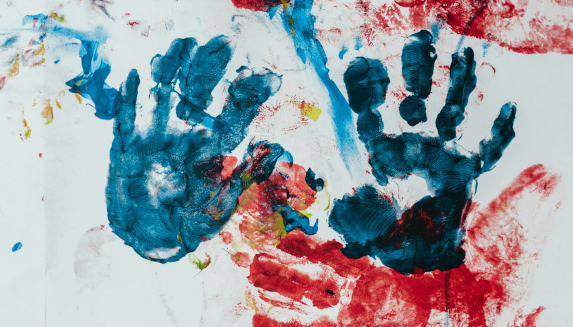
For infants, drawing and painting — though in a very basic way — help children begin to focus attention, explore cause and effect, and develop early motor skills.
When a baby scribbles with a crayon or watches finger-paint swirl, they are observing how their movement changes the mark, noticing color and shape, and practicing reaching and grasping. Marks that look like “nothing” to us are exactly the point at this age — representation isn’t the goal yet, exploration is.
Using a washable paint mat or large, chunky crayons gives babies safe, bold opportunities to make marks. This sensory, exploratory art supports early neural connections and visual-motor coordination.
Something like the Fisher Price Learn & Doodle Desk would be ideal for this age.
New tip: Let them paint with yogurt or pudding on a high-chair tray using a spoon. It’s the same cause-and-effect learning as finger paint, with far less cleanup stress — and it’s perfectly fine if some ends up in their mouth.
Safety note: Avoid crayons or tools with small caps or detachable pieces at this age. Chunky, one-piece crayons or silicone-tipped tools are safer for mouthing.
Quick win: No supplies on hand? A wet finger on a dry chalkboard or steamed-up window works the same visual-motor muscles.
Ages 2-4:
At toddler and early preschool age, drawing and painting become richer: children begin making shapes and representations, experimenting with color or medium, and following simple instructions. This supports fine motor control (holding a brush, making shapes) and cognitive skills (planning what to draw, noticing textures). Children also learn pattern and cause-and-effect (“If I press harder, the mark is darker”) and spatial awareness.
A great pick would be the Crayola Inspiration Art Case or Step2 Deluxe Art Master Desk.
New tip: Narrate instead of correcting. Ask “Tell me about your drawing” rather than guessing what you see (“Oh, is that a dog?”). Open questions support language development far better than naming for them.
Quick win: Tape a roll of butcher paper to a wall. It turns drawing into a low-pressure, repeatable activity instead of a “finish the page” task, and toddlers love the bigger canvas.
Ages 5-6:
For children aged five to six, drawing and painting can support sustained focus, more deliberate creativity, the ability to complete multi-step projects (“first sketch, then paint, then decorate”), and self-expression of ideas. As children develop better motor control, they can treat art as a task with planning, revision, and pride in creation — all of which support cognitive and emotional development.
Consider something like the Crayola Mallette Chevalet Peinture et Création.
New tip: Let mistakes stay. Resist the urge to “fix” a wobbly line — encourage your child to draw over or around it instead. This builds resilience and problem-solving, not just art skill.
Quick win: Start a simple “drawing diary” — one page per day, even for two minutes. It builds the multi-step planning mentioned above without turning into a big production.
Singing & Dancing: Growing Rhythm, Coordination, and Connection
Ages 0-1:
For infants, singing and dancing are powerful developmental tools. When a parent sings a lullaby while bouncing or swaying, the baby experiences rhythm, voice variation, movement, and connection. These sensory-motor experiences support body awareness, attention (listening to voice, moving to beat), and emotional bonding. Music and movement give young children early exposure to expressive arts, which supports social-emotional development.
A simple rhythm ball or motion song playlist would be ideal.
New tip: Your own voice beats a recording. Babies respond more to a parent’s live, varied-pitch voice than to a speaker — even if you’re convinced you can’t sing.
Quick win: Turn diaper changes or car rides into 30-second song moments. Consistency matters more than length at this age.For infants, singing and dancing are powerful developmental tools. When a parent sings a lullaby while bouncing or swaying, the baby experiences rhythm, voice variation, movement, and connection. These sensory-motor experiences support body awareness, attention (listening to voice, moving to beat), and emotional bonding. Music and movement give young children early exposure to expressive arts, which support social-emotional development.
Ages 2-4:
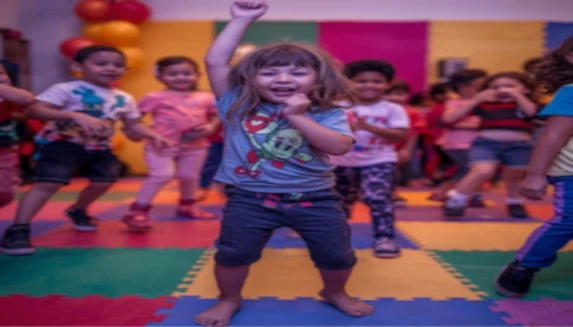
For toddlers and young preschoolers, singing and dancing become more interactive: action songs (e.g., “Head, Shoulders…”), simple choreography, and musical instruments like shakers or drums. These support motor coordination (moving in time), listening skills (following rhythm or instructions), and social interaction (singing together). As children move their bodies and respond to sound cues, they build attention, memory (remembering lyrics/steps), and enjoyment of the arts.
Consider a kids’ rhythm instrument set, dance-song CD, or electronic musical instrument.
New tip: Play freeze-dance. Stopping and starting the music builds impulse control and listening skills — both strong predictors of school readiness.
Quick win: Let your child be the “DJ” and pick the next song. That small bit of choice-making boosts confidence and turns the activity into something they look forward to.
Ages 5-6:
At five to six years old, singing and dancing can support more structured performance, longer pieces, group coordination (choir, dance group), memory of songs, sense of rhythm, and even improvisation. These activities build confidence, persistence, attention to detail (matching beat, remembering steps), and social skills (cooperating, taking turns).
A great pick would be a children’s music kit, karaoke-style microphone, karaoke machine, dance mat, or DJ mixer toy.
New tip: Let them teach you a dance or song they learned elsewhere — at school, from a show, or from a friend. Being the “expert” builds pride and reinforces memory.
Quick win: Start a weekly 10-minute family dance party, same time each week. The routine builds anticipation and habit without needing any equipment.
Art activities naturally strengthen fine-motor coordination, and our list of Parent-Favorite Toys That Build Fine Skills offers great examples.
Pretend Playing: Sparking Imagination and Social Skills
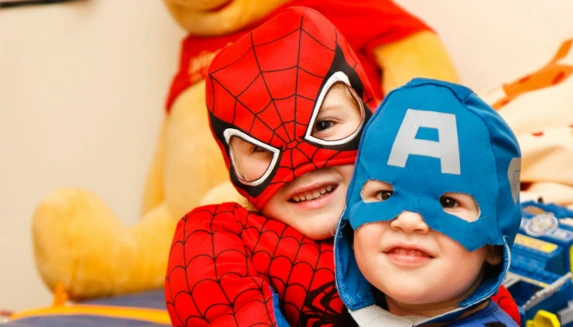
Pretend play is far more than a cute moment or a simple childhood pastime — it is one of the most powerful engines of early brain development. When children imagine, explore, and “try on” different roles, they practice thinking creatively, solving problems, communicating, and understanding the world around them. Research shows that early play with objects gradually transforms into richer symbolic and pretend play, strengthening cognitive pathways, building initiative, and increasing curiosity about how things work.
Ages 0-1:
During the first year, babies explore through movement, touch, mouthing, and simple object handling. Although full pretend scenarios aren’t present yet, early interactions with real objects form the foundation for later symbolic thinking. Allowing infants to experiment with safe items — cups, soft toys, rattles — sparks curiosity, supports sensory development, and builds the brain networks needed for imagination. Parent participation matters at this age: narrating actions (“You’re feeding the bear!”) or showing gentle demonstrations helps babies connect actions with meaning and invites the earliest forms of initiative.
A simple rhythm ball, motion song playlist, or baby learning toy would be ideal.
New tip: Imitation games count as pretend play, too. Peekaboo and simple imitation (“clap when I clap”) are the earliest form of pretend play and are genuinely developmentally valuable, not just cute.
Quick win: A cardboard box and a wooden spoon often outperform branded toys at this age for open-ended exploration.
Ages 2-4:
Toddlers and preschoolers enter the golden age of pretend play. They begin substituting objects, acting out roles, and creating imaginary scenes — all of which strengthen creativity, language, curiosity, and early executive-function skills. When children decide the storyline (“I’m the doctor — check my patient!”), they practice taking initiative and flexibility in thinking. Research shows that this self-directed symbolic play builds stronger neural links for representation and memory. Parents who join as playful partners — not leaders — help enrich the story while still letting the child’s imagination guide the scene.
Consider a grocery store set, cleaning set, or play kitchen set.
New tip: Resist correcting the “rules” of their pretend world (the dragon can absolutely be friends with the firefighter). Flexibility in pretend play directly supports flexible thinking later on.
Quick win: Rotate a small pretend-play bin weekly — doctor one week, restaurant the next — to keep novelty high without buying new toys constantly.
Age 5-6:
By ages five and six, pretend play becomes longer, more structured, and more socially complex. Children plan storylines, negotiate roles with peers, and explore ideas such as fairness, problem-solving, and emotional understanding. These richer pretend scenarios help strengthen creativity, social reasoning, and the brain’s higher-level symbolic networks. When parents participate through simple prompts (“Where should our spaceship go next?”), they encourage deeper curiosity and help children stretch their ideas into more elaborate narratives.
Consider a Fresh Mart grocery store set for older kids, a tool/drill set, or a life-cycle animal kit.
New tip: This is the age where negotiating roles (“I want to be the queen too”) becomes a real social-skill workout. Let a little conflict play out before stepping in.
Quick win: Ask one open prompt per session (“What happens if it starts raining in your story?”) rather than steering the plot. It stretches narrative thinking without taking over.
Frequently Asked Questions
My child doesn’t seem interested in art at all — should I worry?
Not necessarily. Interest in different art forms varies a lot by temperament. Some children gravitate toward movement (singing/dancing) and others toward quiet, hands-on activities (drawing/modelling). Offer a mix and follow their lead rather than pushing one medium.
How much time should we spend on these activities each day?
There’s no magic number. Short, frequent moments (5–10 minutes woven into the day) tend to work better than long scheduled sessions, especially for children under 5.
Is it okay if my child only wants to do the same activity over and over?
Yes. Repetition is how young children master a skill before moving on to the next challenge. Mastery often comes before variety.
Do expensive toys or kits matter more than household items?
No — open-ended household items (boxes, spoons, paper, fabric scraps) are often just as developmentally valuable as branded toys, because they don’t dictate how the child should play.
My child gets frustrated when their drawing or song “doesn’t come out right.” How should I respond?
Focus your comments on effort and process (“I love how you mixed those colors”) rather than the end result. This helps children build resilience and stay motivated rather than chasing a “perfect” outcome.
Should boys and girls be encouraged toward different art forms?
No — drawing, painting, singing, dancing, and pretend play all build the same core skills (motor, cognitive, social-emotional) regardless of gender. Offer the same range of activities to all children.
✨ Final Thought
In each age band, each medium — drawing/painting, singing/dancing, pretend play — offers unique developmental benefits: stronger motor skills, better attention span, richer self-expression, and improved cognitive and emotional growth. Art is not a luxury — it’s integral. Read more on how art impacts child development in this article.
Because something important is happening quietly in the background, in those everyday moments:
Tiny Steps – Big Skills.
Continue Supporting Your Child’s Development:
- How imagination shapes early learning → Little Rooms Big Ideas
- What fine-motor skills look like in toddlers → Tiny Steps Big Skills
- Discover your natural teaching style → Unlock Their Genius (Quiz)
See all posts from “Child’s World” here