
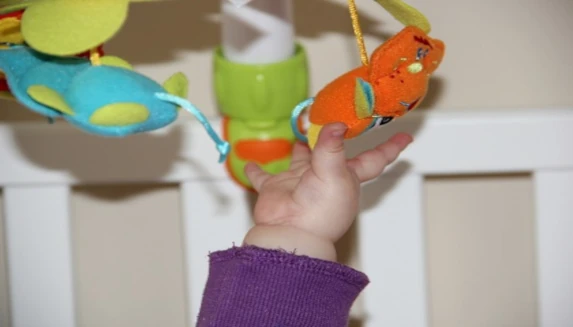
The toys below encourage curiosity, coordination, and confidence through hands-on play, helping little ones strengthen the muscles and movements essential for everyday tasks. When parents choose toys that match their child’s age and stage, learning becomes natural—transforming every playful moment into a gentle step toward independence.
0 to 6 Months
During these first months, babies develop their earliest fine motor abilities: grasping, reaching, opening their hands, and exploring textures. These foundations prepare them for later milestones such as transferring objects between hands, holding toys securely, and coordinating both hands during play.
Affiliate and referral links are included below to endorse products we recommend. If you purchase through these links, we earn a small commission at no extra cost to you.
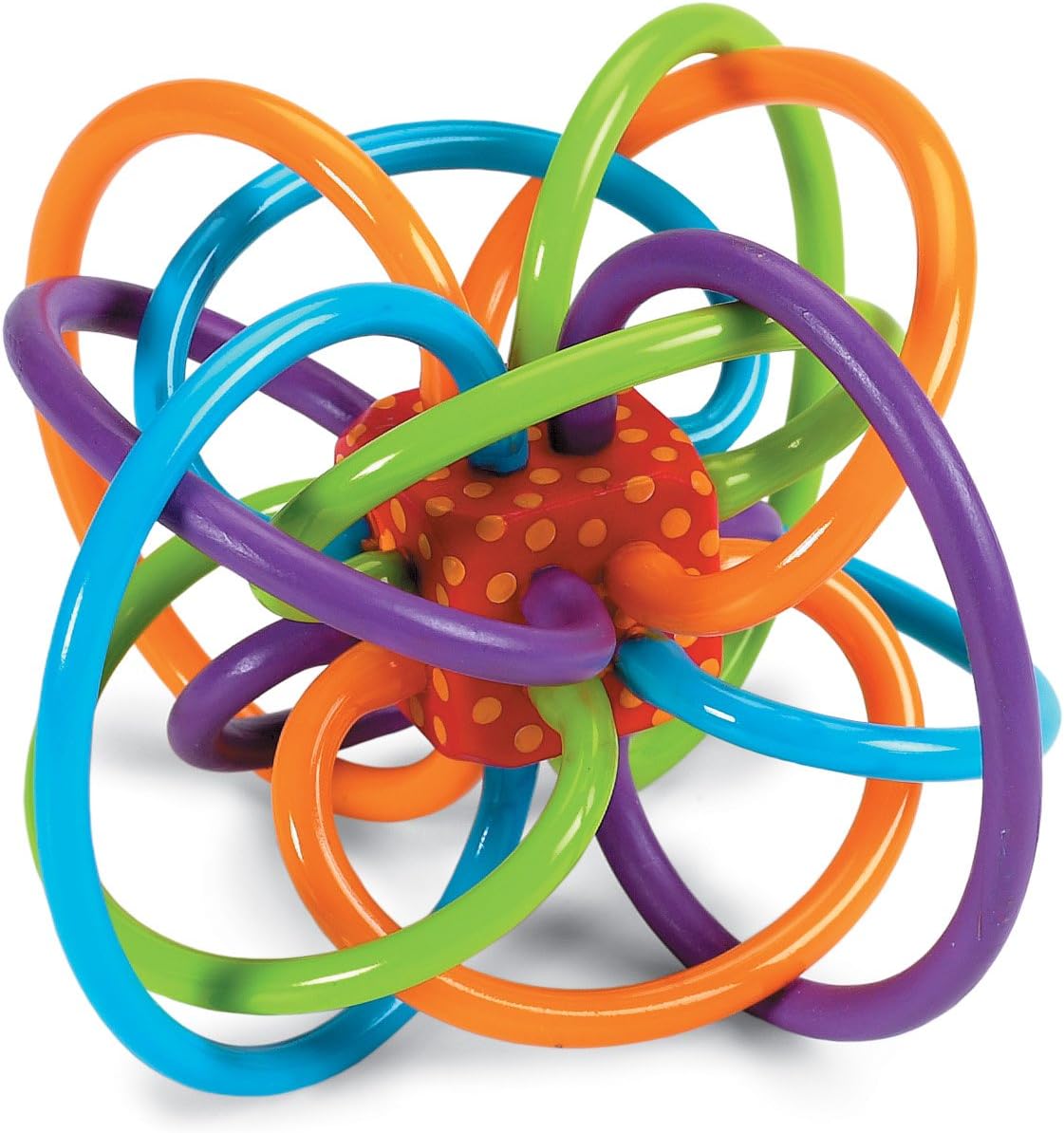
The Skwish is a beloved first toy crafted from sustainably sourced wood, featuring elastic strings that compress and spring back to captivate curious hands. Its gentle rattle sound rewards every squeeze and shake, while the lightweight, open design makes it easy for tiny fingers to grasp, hold, and explore from the earliest weeks.
🧠Naturally trains the palmar grasp reflex through satisfying, resistance-based squeezing.

These bold black-and-white (and color) cards are designed around how newborn eyes actually work — stimulating the visual cortex with high-contrast patterns that spark focus and tracking. The accompanying soft mirror adds an extra layer of engagement, encouraging babies to reach, bat, and begin coordinating eyes with hands.
🧠Jumpstarts hand-eye coordination by giving babies a compelling visual target to reach toward.

Soft, crinkly, and full of sensory surprises, these fabric books let babies experience their very first “reading” through touch and texture. Each page is designed for little fists to grip, scrunch, and pull, building hand strength from day one. Tear-proof and washable, they’re as practical as they are stimulating.
🧠Develops grip strength and tactile awareness through safe, hands-on page exploration.
6 Months to 1 Year
Between six months and one year, babies begin picking up objects, banging toys together, and practicing push–pull motions. These actions strengthen hand muscles, build hand-eye coordination, and support the problem-solving skills needed for stacking, sorting, and early manipulation.

This trio covers three essential developmental zones at once: wobbly stacking with Tobbles challenges balance and precision placement; the spinning Spinny builds wrist rotation; and Dimpl’s satisfying silicone bubbles strengthen finger isolation and push-pull control. Together they offer a rich, layered fine motor workout for growing hands.
🧠Targets three distinct hand skills — stacking, spinning, and pressing — in one compact bundle.

Thoughtfully curated by child development experts, the Babbler Kit includes a pegged wooden ball drop, fabric sensory pouches, and a mirror that grows with baby through the crawling stage. Every item is chosen to challenge the exact motor skills emerging at this precise developmental window, making playtime both purposeful and joyful.
🧠Provides stage-matched fine motor challenges so every activity meets baby exactly where they are developmentally.

This award-winning play gym spans five developmental zones, from a high-contrast overhead arch to a tummy-time wedge and textured sensory toys. Crafted from organic cotton and sustainably sourced wood, it supports reaching, grasping, and cross-body movement — the very foundations of fine and gross motor development — from the first weeks onward.
🧠Grows alongside baby through multiple developmental stages, making it one of the longest-lasting investments in early motor development.
1 Year Old
At one year old, toddlers begin placing shapes, stacking blocks, twisting objects, and pointing with more intention. These skills support independence, early communication, and creativity while preparing hands for dressing, feeding, and early writing tasks.
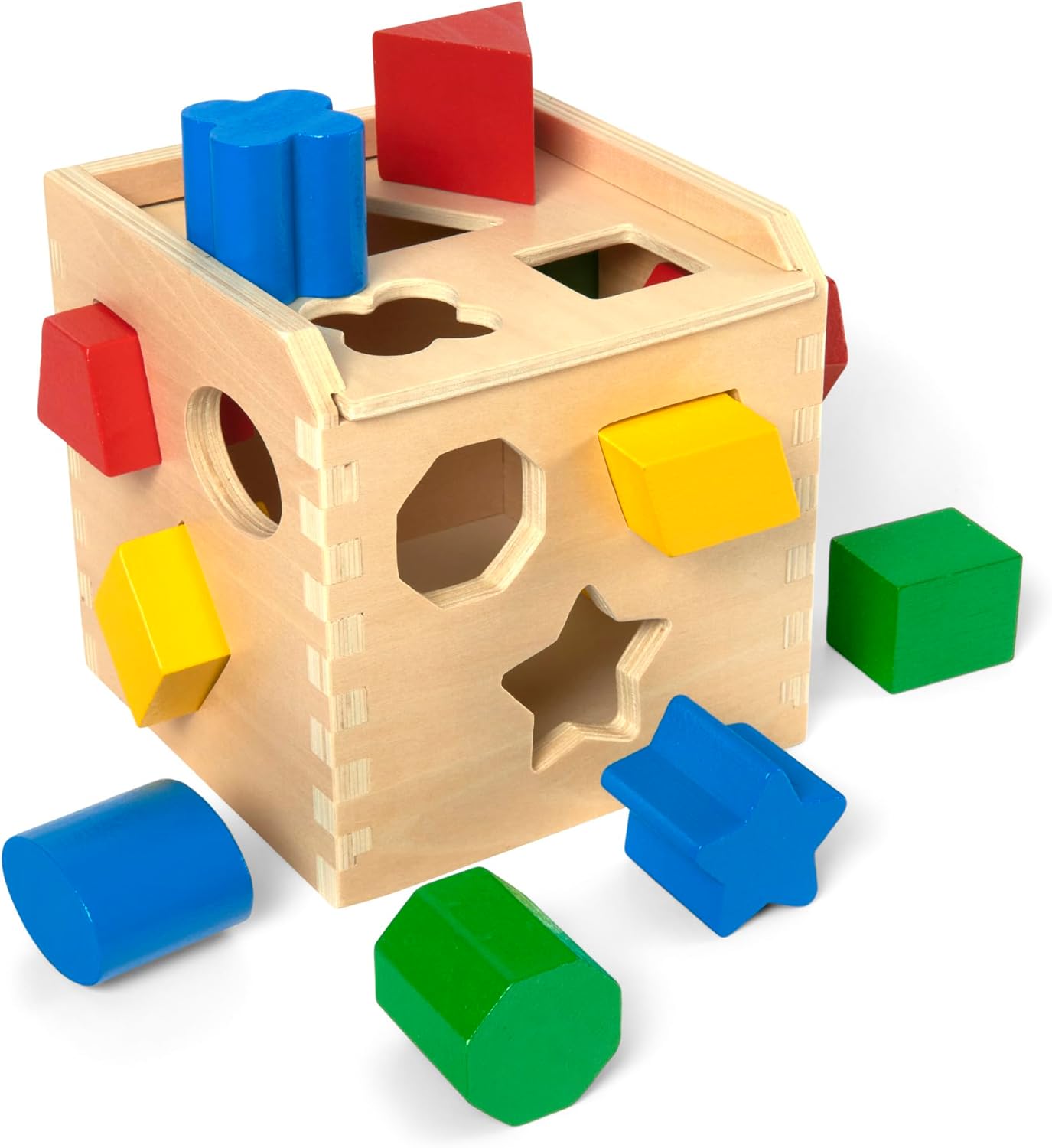
This classic wooden cube presents 12 different geometric shapes, each requiring a child to rotate, orient, and press pieces precisely into matching slots. The satisfying click of a correctly placed shape provides instant positive feedback, while the process of trial and error quietly builds shape recognition, wrist rotation, and pincer strength.
🧠Builds shape-recognition and wrist-rotation skills through satisfying, self-correcting play.

This cheerful piggy bank makes the simple act of posting coins irresistible with lights, music, and three levels of growing content. Each “deposit” requires a child to align and press a coin into a narrow slot, building precise finger control and hand-eye coordination, all while reinforcing early number and color concepts.
🧠Motivates repeated fine motor practice through engaging cause-and-effect sound and light rewards.
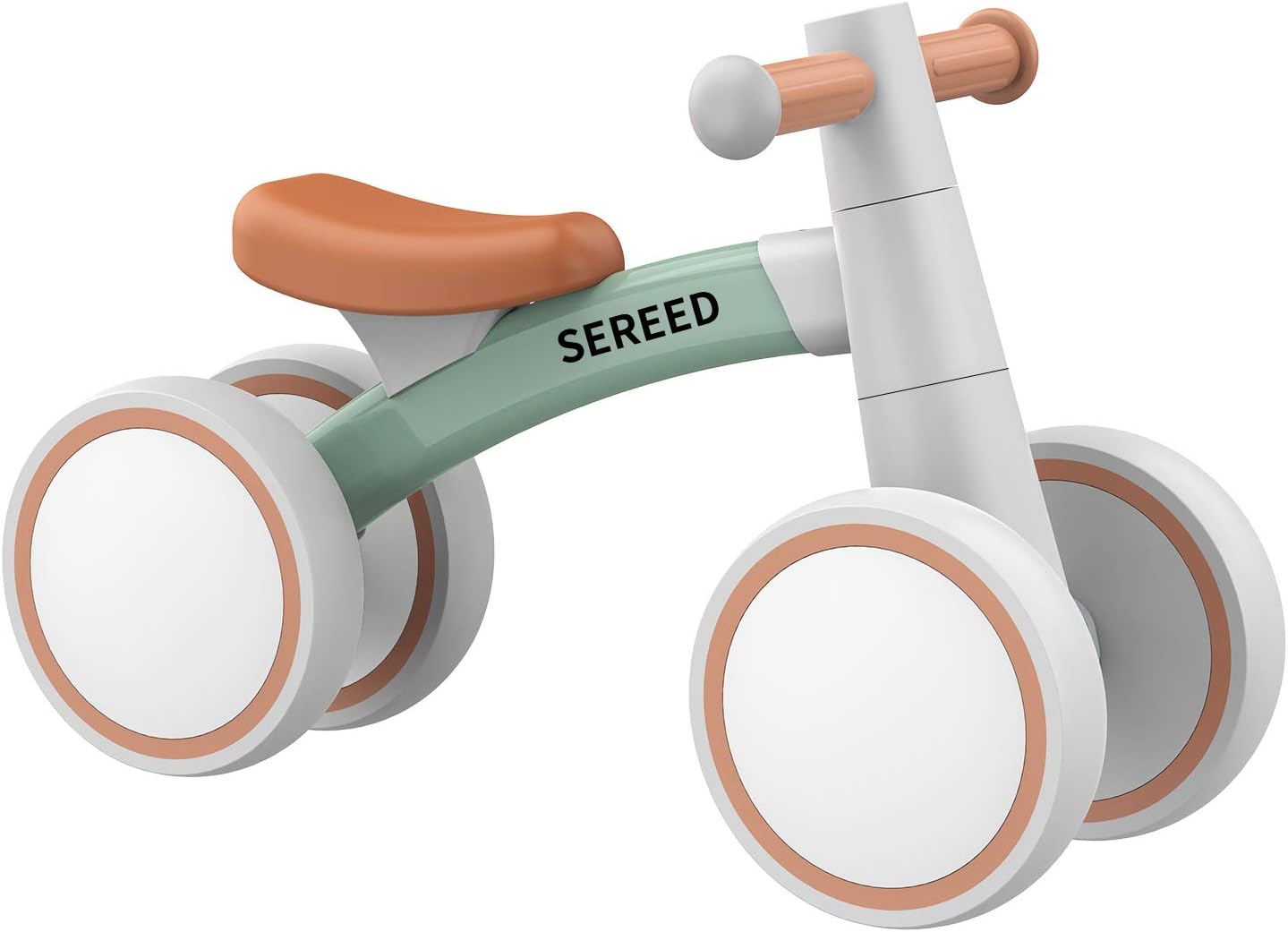
Built low to the ground with four stabilizing wheels, this starter bike lets toddlers focus on steering and pushing without fear of toppling. The limited-turn handlebar prevents overcorrection and encourages safe, controlled movement. Over time it builds grip strength, shoulder stability, and the bilateral coordination that underlies many fine motor tasks.
🧠Introduces steering grip and bilateral hand control in a safe, confidence-building format ideal for first-time riders.
2 Years Old
Two-year-old refine coordination through threading, building, twisting, and simple tool use. These activities strengthen precision, bilateral coordination, and focus—skills essential for feeding themselves, turning pages, stacking higher towers, and beginning to draw intentional shapes.

Threading a lace through a series of chunky wooden beads demands focused attention, steady hand positioning, and precise finger control — exactly the skills two-year-olds are ready to begin mastering. The vibrant colors invite creative pattern-making, so children stay motivated as they work through each bead, quietly building concentration alongside dexterity.
🧠Directly targets the pincer grip and hand-eye precision needed as a foundation for early writing.

Complete with a wooden board, bolts, nuts, screws, and five realistic tools, this portable kit lets toddlers tighten, loosen, and build at their own pace. Working with a screwdriver and wrench requires both hands to cooperate — one to hold, one to turn — making this a natural and engaging exercise in bilateral coordination.
🧠Develops bilateral hand coordination and tool-use confidence through satisfying, real-world role play.

This friendly dinosaur opens wide and “chomps” numbered balls as children feed them in one by one. The posting action requires careful aim and release, while colorful lights and songs reinforce each correct move with enthusiastic feedback. It seamlessly blends cause-and-effect learning, number recognition, and precise hand control into one irresistible toy.
🧠Combines targeted posting practice with early numeracy in one highly motivating, multi-sensory play experience.
3 to 4 Years Old
At ages three to four, children develop stronger precision and control. Construction toys, tracing tools, and building sets support grip development, wrist stability, and planning—key foundations for handwriting, cutting skills, and more advanced creative building.
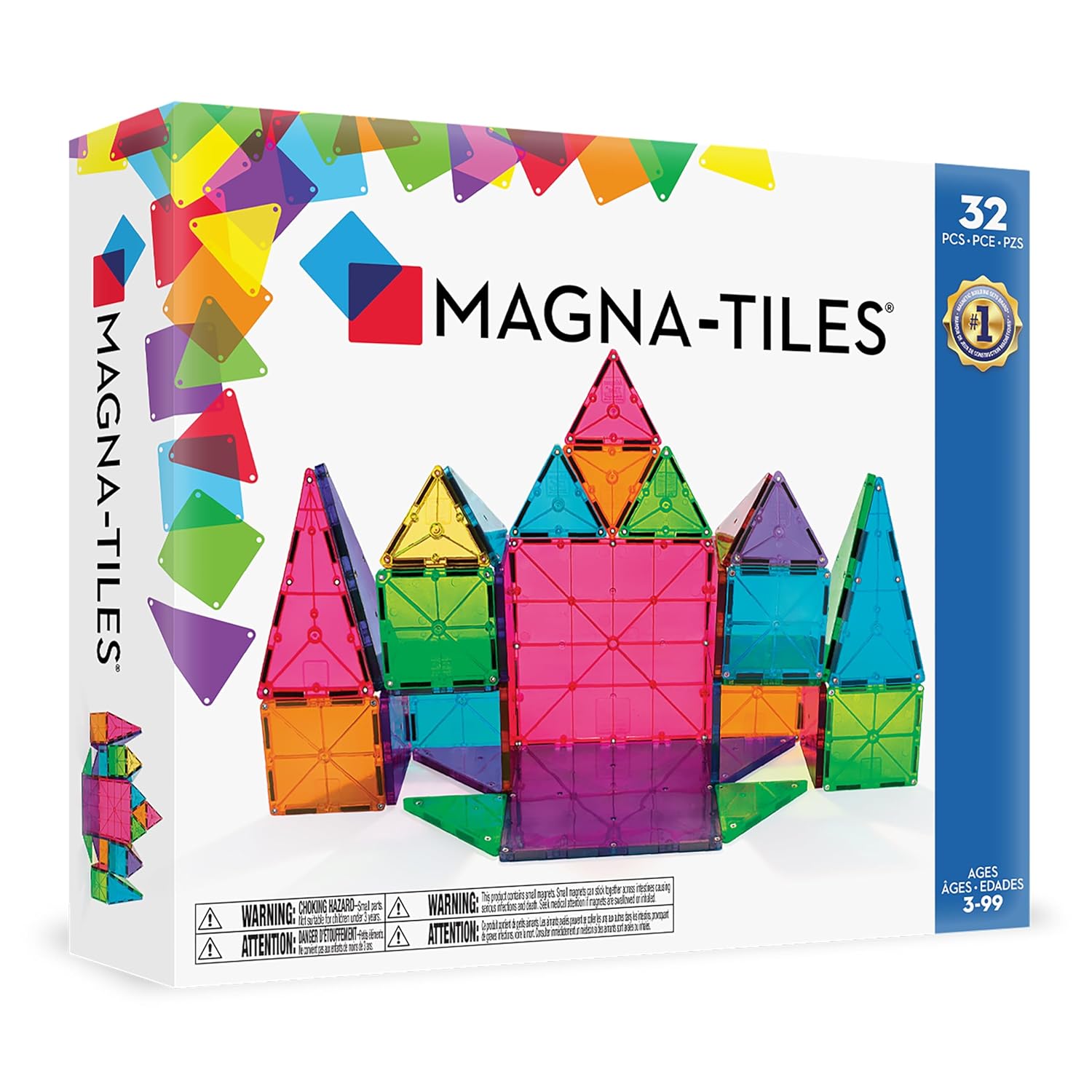
These colorful magnetic tiles click satisfyingly into place, requiring children to hold pieces steady, align edges carefully, and plan three-dimensional structures in their minds before building them with their hands. The magnetic feedback teaches precision without frustration, and open-ended building challenges keep children returning to explore increasingly complex constructions.
🧠Develops spatial reasoning and precise hand placement through open-ended, endlessly replayable magnetic construction.

Large, chunky, and forgiving for developing hands, these magnetic building blocks are sized to be gripped and clicked together easily by three- and four-year-olds. Connecting and separating panels strengthens finger muscles and hand stability, while the freedom to build anything — from towers to tunnels — nurtures creative thinking alongside physical control.
🧠Builds hand strength and stable grip through satisfying magnetic connection in a format sized perfectly for toddler hands.

This clever set uses pressure-sensitive ink that only appears on special Color Wonder paper, giving children complete creative freedom without the worry of stained walls or furniture. Holding and controlling the brush naturally develops pencil grip, wrist control, and the light-pressure awareness children need before transitioning to crayons and early writing tools.
🧠Builds proper pencil grip and brush-pressure control in a completely mess-free environment — ideal for independent creative play.
5 to 6 Years Old
At ages five to six, children transition from basic exploration to mastery and refinement. Their fine motor skills become more specialized, allowing for greater independence in academic and daily tasks.

The raised grooves in these reusable workbooks act like a physical guide rail for a child’s stylus, training hands to follow the correct strokes for each letter and number through repetition. Disappearing ink means every page is fresh for another attempt, making practice feel low-stakes and encouraging persistence without the pressure of permanence.
🧠Builds letter-formation muscle memory through guided, tactile stroke repetition that no standard worksheet can replicate.

Children physically lift, rotate, and fit foam state and country pieces into their correct positions, reinforcing the precise pincer movements and spatial reasoning that underpin confident fine motor control. Each piece is labeled with capitals and key facts, so geography is absorbed naturally while hands stay busy with purposeful, focused manipulation.
🧠Combines fine motor manipulation with geography learning, giving every placement a meaningful cognitive payoff.

Players draw, hold, and strategically place colored tile pieces onto a shared grid, matching by shape or color to build and block lines. Handling the tiles develops deliberate, controlled finger movements, while the underlying strategy sharpens pattern recognition and planning skills — making this as rewarding mentally as it is physically engaging.
🧠Sharpens both fine motor precision and strategic thinking in one family game that grows more challenging as children do.
✨ Final Thought
Building fine motor skills can happen naturally through play, one small movement at a time. From grasping and stacking to threading, drawing, and creating, these simple toys help children strengthen the coordination and control they’ll use every day—whether it’s holding a spoon, turning pages, or eventually writing their first letters.
What matters most isn’t having more toys, but choosing the right ones—and giving your child the time to explore them at their own pace. Celebrate the small wins, and the moments of quiet concentration.
Because something important is happening quietly in the background, in those everyday moments:
Tiny Steps – Big Skills.
Read Next
See all posts from “Smart Picks” here