
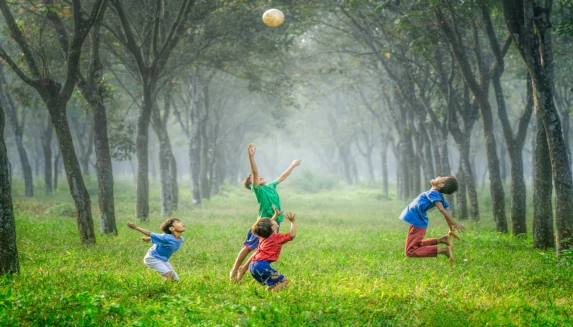
When young children run, climb, jump, dance, or roll around the living room, or engage with motion toys, it may appear to be simply “play.” But research on physical activity and children’s brains shows something exciting…
Every hop, slide, and wiggle can help build better focus, stronger self-control, richer language, and even stronger foundations for reading and math. This is true for both regular sport and more irregular, playful movement at home.
If you’re curious how movement connects with attention and self-regulation, our post Eyes On Mind On explains this beautifully. You can also explore your child’s unique movement-learning style through our quiz Beyond the Bouncy Castle.
⭐ Short on time?
Skip to the comparison table below.
⭐ Ready to find more details?
Scroll down to see how motion toys can support brain growth and learning through active play.
Running, Climbing and Jumping Boost Kids Brain
The review from National Library of Medicine in “Physical Activity and Cognitive Functioning of Children” found that when children move, their brains get a boost. Increased circulation brings more oxygen and nutrients to the areas that support attention, memory, and thinking. Even short bursts of active play can sharpen focus and selective attention – the ability to concentrate on a task and ignore distractions for a while afterward.
Affiliate and referral links are included below to endorse products we recommend. If you purchase through these links, we earn a small commission at no extra cost to you.
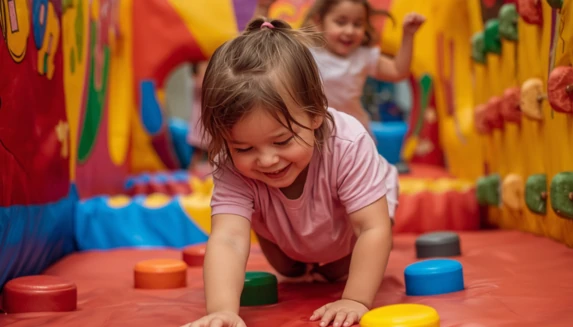
For toddlers and preschoolers, this doesn’t have to mean a strict training routine. It can be as simple as climbing over a soft indoor obstacle course like the SoftZone Climb and Crawl Playset, or bouncing on a Toddler Trampoline . As they crawl, climb, slide, and balance, their hearts pump faster,circulation increases, and the brain gets that extra supply of oxygen and nutrients it loves.
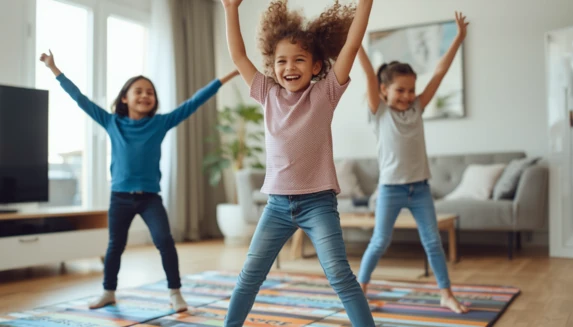
Aerobic play like dancing on a FWFX Dance Mat for TV Games is especially powerful for boosting circulation. After these “energy bursts,” many children can sit more calmly for reading, puzzles, or quiet play because their brains are nicely warmed up.
Active Play Enhances Self-Control and Goal-Setting
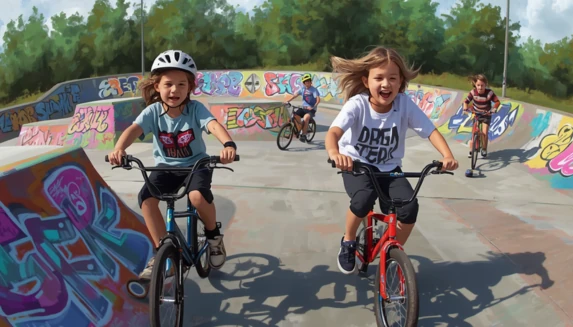
The review shows that sport and active play are linked with better executive functions skills like planning, self-control, flexible thinking, and the ability to set and reach goals. When your child rides a balance bike, for example, they decide where to go, how to steer, and when to stop.
On a Gotrax KS12 Balance Bike for 2-5 Years Old, they’re not only training muscles; they’re practicing “I want to reach the end of the drive way”, “I need to slow down,” and “I can wait for my turn.”
Activities that require balance and control, like learning to skate with SULIFEEL Rainbow Unicorn 4 Size Adjustable Roller Skates challenge children to regulate their movements. Every time they stand up again after wobbling, they are practising persistence, patience, and self-regulation — all key ingredients of motivation and goal-setting.
Even turn-taking games such as the Electronic Bowling Alley Game Set build self-control. Children wait for their turn, follow simple rules, and manage their excitement when it’s finally time to roll the ball.
Physical Activity Improves Language and Understanding Words
Physically active children often show better language skills: improved vocabulary, better understanding of words, and stronger abilities in tasks like detecting sentence errors or spelling (as they get older). When parents talk and play at the same time, the effect can be even stronger.
At home, you might describe what your child is doing as they climb the SoftZone Climb and Crawl Playset: “You’re climbing up the blue block… now you’re sliding down into the ball pool! Can you find the red ball?” Movement keeps the child engaged, while language wraps around the action.On the FWFX Dance Mat for TV Games, you might say, “Step on the left arrow… now the right arrow!” Combining movement words with actions helps young children connect sounds, meanings, and body awareness.
Physical Engagement Supports Selective Attention
Working memory — the ability to hold and use information in mind — is essential for learning to read and understand numbers. The review shows that children who are more physically active often do better in memory tasks and show higher achievement in math and reading.
Many play activities naturally train working memory. On the Electronic Bowling Alley Game Set , kids remember whose turn is next, how many pins they knocked down before, and how to stand and aim. With a soccer goal set such as the Happy Jump Soccer Net , children can remember simple “play patterns” like “two passes, then shoot,” which quietly exercises their working memory and planning.
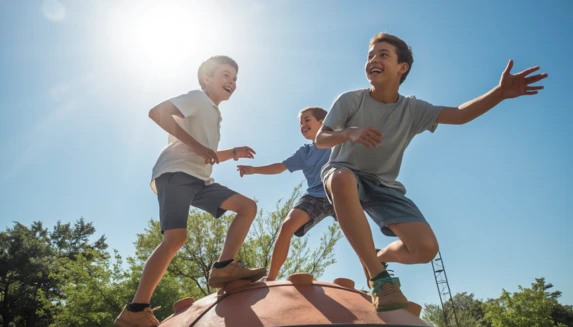
Active play also supports better focus and selective attention. Balancing on a bike, skating on SULIFEEL Rainbow Roller Skates , or climbing a dome like the EASY OUTDOOR Space Dome Climber requires children to tune out distractions and pay attention to their bodies and the space around them — the same attention skills they’ll need later for listening in class or focusing on a book.
Motion Toys to Encourage Physical Activity and Mind Growth
Below is a mix of indoor and outdoor ideas for playful ways to support movement and brain boost :
| Kids Gear | Indoor/Outdoor | Age | Key Feature |
|---|---|---|---|
| ECR4Kids SoftZone Climb and Crawl Playset | Indoor | 9 Month - 3 years | perfect for safe climbing, crawling, sliding and early body awareness |
| FWFX Dance Mat for TV Games | Indoor | Kids & Adults | great for aerobic play, rhythm, and following visual cues |
| Electronic Bowling Alley Game Set | Indoor | Family Bonding Activity | supports turn-taking, counting pins, and simple strategy |
| Toddler Trampoline | Indoor/Outdoor | 1 year to 12 years | a bouncy way to burn energy and boost circulation indoors or outdoors. |
| Gotrax KS12 Balance Bike | Outdoor | 2 to 5 years | builds balance, confidence, and early “bike sense” |
| SULIFEEL Rainbow Roller Skates | Outdoor | 3 to 12 years | great for coordination, persistence, and body control |
| Jump Soccer Net | Outdoor | 6 years and above | encourages running, kicking, teamwork, and simple game rules |
| EASY OUTDOOR Space Dome Climber | Outdoor | 3 to 9 years | supports climbing strength, spatial awareness, and imaginative play |
| Lifetime Geometric Dome Climber | Outdoor | 3 to 10 years | fun way to climb, hang, and build upper-body strength |
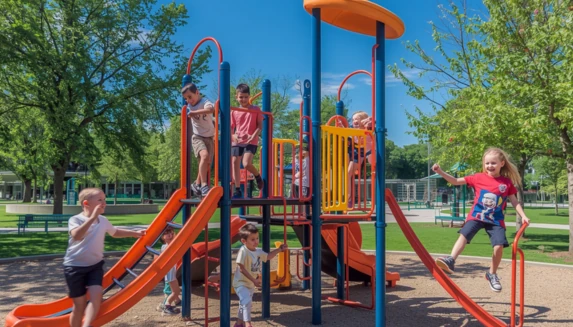
To Wrap Up, Here Are Some Valuable Tips for Nurturing Movement Habits in Toddlers and Preschoolers:
- Sprinkle short “movement snacks” through the day. Even 5–15 minutes of climbing, dancing or riding the balance bike can lift attention and mood.
- Mix free play with simple challenges. Set up an easy obstacle course, or a backyard route and invite your child: “Can you climb over, under, then around?”
- Let your child set tiny goals. It might be “ride to the tree and back.” Or, the bowling game, “knock down three pins this turn.”
- Pair movement with language. Describe actions (“You’re spinning, now you’re stopping”), name body parts and directions, and ask simple questions while your child plays.
- Use movement as a reset. If your child gets fidgety during quiet play, invite a dance break on the Dance Mat or a few bounces on the Trampoline, then come back to reading or drawing.
- Keep it joyful, not pressured. The research shows benefits from both regular and irregular movement — so spontaneous dance parties, backyard soccer bursts, and hallway bowling all “count.”
✨ Final Thought
The big message for parents is simple and hopeful: every playful movement – whether on foam blocks in the living room, a dance mat in the basement, or a balance bike in the driveway – can support your child’s ability to focus, remember, understand words, manage emotions, and grow into a confident learner.
Sports don’t need to be complex; they can be integrated into everyday, joyful play both at home and outdoors.
Because something important is happening quietly in the background, in those everyday moments:
Tiny Steps – Big Skills.
Continue Supporting Your Child’s Development:
See all posts from “Child’s World” here