
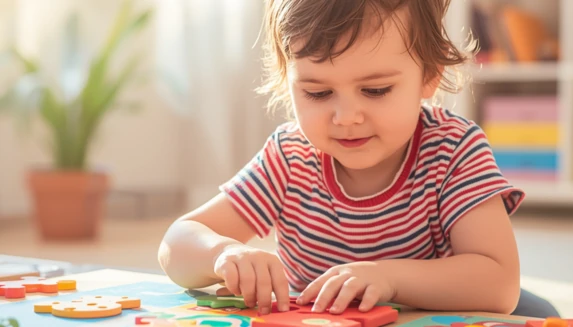
Play is so much more than a simple pastime—it is the neurological engine of early childhood development.
When a child engages in play, they aren’t just having fun; they are actively constructing the foundational cognitive pathways required to focus, explore, and decipher the world around them.
Neuroscience research from Harvard University’s Center on the Developing Child highlights that a child’s ability to pay attention is driven by the development of “executive function” and self-regulation skills. These cognitive processes act like an air traffic control system in the brain, filtering out distractions, prioritizing tasks, and setting goals. Furthermore, a landmark study by the American Academy of Pediatrics (AAP) emphasizes that play is essential to this structural brain development, directly fostering the executive functioning skills children need to navigate future academic and social challenges.
Through focused play, children learn to sustain attention, test innovative concepts, and develop cognitive flexibility—the ability to bounce back and problem-solve when things don’t go according to plan.
Many parents rely on highly rated toys like the Fat Brain Toys Dimpl and the Melissa & Doug First Bead Maze to anchor this process. These tools naturally strengthen attention spans and core problem-solving mechanics through intuitive, hands-on engagement.
When a child concentrates on completing a puzzle, delicately balances one more block onto a tower, or searches for a hidden object, they are gently exercising the exact neural frameworks they will one day rely on to strategize, think critically, and solve complex real-world challenges. Sustaining this calm focus also helps toddlers master emotional regulation, a concept we explore deeply in our quiz, From Tantrums to Triumphs.
Below, we will examine the intrinsic link between attention and problem-solving, followed by practical, age-specific strategies tailored for three developmental milestones: 0–1, 2–4, and 5–6 years old.
How Attention Supports Problem-Solving
Attention serves as the gatekeeper to a child’s intellect. It allows them to tune into a specific task, ignore environmental distractions, and maintain persistence—even when an activity becomes frustrating. When a child can sustain focus, they can effectively identify variables, remember sequential steps, test hypotheses, and pivot to a new approach when an initial attempt fails.
Consider the classic example of a toddler building with blocks:
- They stack… and the tower collapses.
- They pause, observe, adjust their strategy… and it collapses again.
- One final, deliberate attempt… and it stands!
This fleeting everyday moment is actually a sophisticated scientific experiment in action. High-quality building tools, such as the parent-favorite MEGA Bloks First Builders Set, elevate these moments by making tactile experimentation deeply engaging. Over time, these micro-successes accumulate, giving children the cognitive confidence to tackle increasingly complex challenges as they grow.
Age 0–1 (Infants): Cultivating Early Focus
At this stage, attention spans are naturally brief, but an infant’s innate curiosity is boundless. Babies thrive on predictable repetition, gentle novelty, and interactive engagement. Simple, purposeful play—such as peek-a-boo, tracking a rolling ball, or exploring a textured toy—lays the groundwork for sustained visual and auditory focus.
How to Cultivate Attention (Ages 0–1):
- Prioritize One-on-One Moments: Slow-paced, face-to-face interaction encourages babies to synchronize their attention with you and the object you are exploring together.
- Introduce Multi-Sensory Toys: Soft blocks, crinkly books, and textured surfaces keep tiny hands and curious eyes fully engaged.
- Pause and Observe: Give your infant the psychological space to explore an object thoroughly without rushing them to the next stimulus.
- Narrate the Experience: Descriptive phrases like, “You found the shiny blue ball!” bridge the gap between visual focus and early language acquisition.
Highly recommended options for early sensory development include the Manhattan Toy Winkel Rattle, the Bright Starts Oball Shaker, and the Tummy Time Water Mat by Magifire—all engineered to capture and hold an infant’s developing gaze.
Recommended Toy Categories for Infants:
- Soft Rattles & Sensory Discovery Toys
- Developmental Baby Mirrors
- High-Contrast Visual Toys
Age 2–4 (Toddlers & Preschoolers): Purposeful Exploration
As children transition into toddlerhood and preschool age, their play shifts from accidental discovery to intentional execution. They begin to establish distinct, self-directed goals: “I want to build a long train track,” or “I want to make this tower taller than me.” (To explore how these milestones build sequentially over time, visit our comprehensive guide: Tiny Steps, Big Skills).
A toddler’s attention span expands exponentially when their play feels meaningful, and when they are permitted to investigate their environment at their own pace.
How to Nurture Attention (Ages 2–4):
- Provide Open-Ended Building Materials: Blocks, train tracks, and stacking elements encourage long-term planning and deep cognitive immersion.
- Protect the “Flow State”: Allow them the uninterrupted time required to finish their small personal projects, whether that means completing a track layout or finishing a block tower.
- Integrate Mindful Focus Games: Simple memory matching cards, hide-and-seek mechanics, and introductory puzzles gently stretch cognitive endurance.
- Curate a Minimalist Play Space: Reducing environmental clutter lowers sensory overload, allowing for deeper, longer concentration.
- Ask Strategic, Open-Ended Questions: Prompting them with questions like, “What do you think will happen if we add this wider block to the bottom?” sparks analytical thinking.
Top-rated parent favorites for nurturing persistence in this age bracket include the Hape Wooden Train Set, Melissa & Doug Self-Correcting Puzzles, and SmartMax Magnetic Building Blocks.
Recommended Toy Categories for Toddlers:
- Educational Toddler Block & Stacking Sets
- Shape Sorting & Pattern Matching Toys
- Intuitive Beginner Puzzles
- Modular Wooden Train Sets
Age 5–6 (Preschoolers & Early School Age): Structured Concentration
By ages five and six, children possess the neurological readiness for extended activities, structured rules, collaborative teamwork, and multi-step execution. This developmental window offers an ideal opportunity to expand their cognitive endurance in a natural, stress-free environment.
How to Expand Attention (Ages 5–6):
- Introduce Collaborative Games with Rules: Board games, memory challenges, and foundational strategy games teach patience, turn-taking, and impulse control.
- Encourage Multi-Day “Master Projects”: Introduce intricate building kits, detailed arts and crafts, or large-scale cardboard constructions that require prolonged engagement over several sessions.
- Foster Metacognition: Asking reflective questions such as, “How did you figure out where that difficult piece belonged?” helps children understand their own thought processes.
- Promote Peer Problem-Solving: Structured group play requires children to exercise high levels of self-regulation and collective attention.
- Minimize Rapid Task-Switching: Encourage your child to stay with a single chosen activity for a dedicated period before migrating to the next.
Excellent, highly reviewed choices for boosting advanced focus and critical thinking at this stage include the ThinkFun Zingo Board Game, the LEGO Classic Creative Bricks Set, and the interactive Osmo Genius Starter Kit.
Recommended Toy Categories for Early School Agers:
- Beginner Strategy & Cooperative Board Games
- Immersive STEM Building & Engineering Kits
- Complex Imagination & Pretend Play Sets
- Advanced Memory & Spatial Reasoning Games
✨ Final Thought
By dedicating just a few minutes each day to encouraging focused, joyful, and uninterrupted play, you are gifting your child the foundational infrastructure for lifelong learning: the confidence to focus deeply, think creatively, and approach challenges with an optimistic heart.
Because behind the scenes of those ordinary, everyday moments, a profound transformation is taking place:
Tiny Steps. Big Skills.
Read Next
See all posts from “Child’s World” here